Aluminium Carport vs. Wood vs. Steel: Which Material Is Best?.
Comparing carport materials — aluminium, wood, and steel — on durability, maintenance, cost, design flexibility, and sustainability.
Choosing the right carport material affects how your structure looks, lasts, and performs over decades. Here is an honest comparison of the three most common options.
Aluminium
Durability: Aluminium does not rust, rot, or warp. It is naturally resistant to corrosion, making it ideal for coastal and humid climates. Powder-coated aluminium retains its colour for 15–20 years without repainting.
Maintenance: Essentially zero. An occasional wash with water is all that is needed.
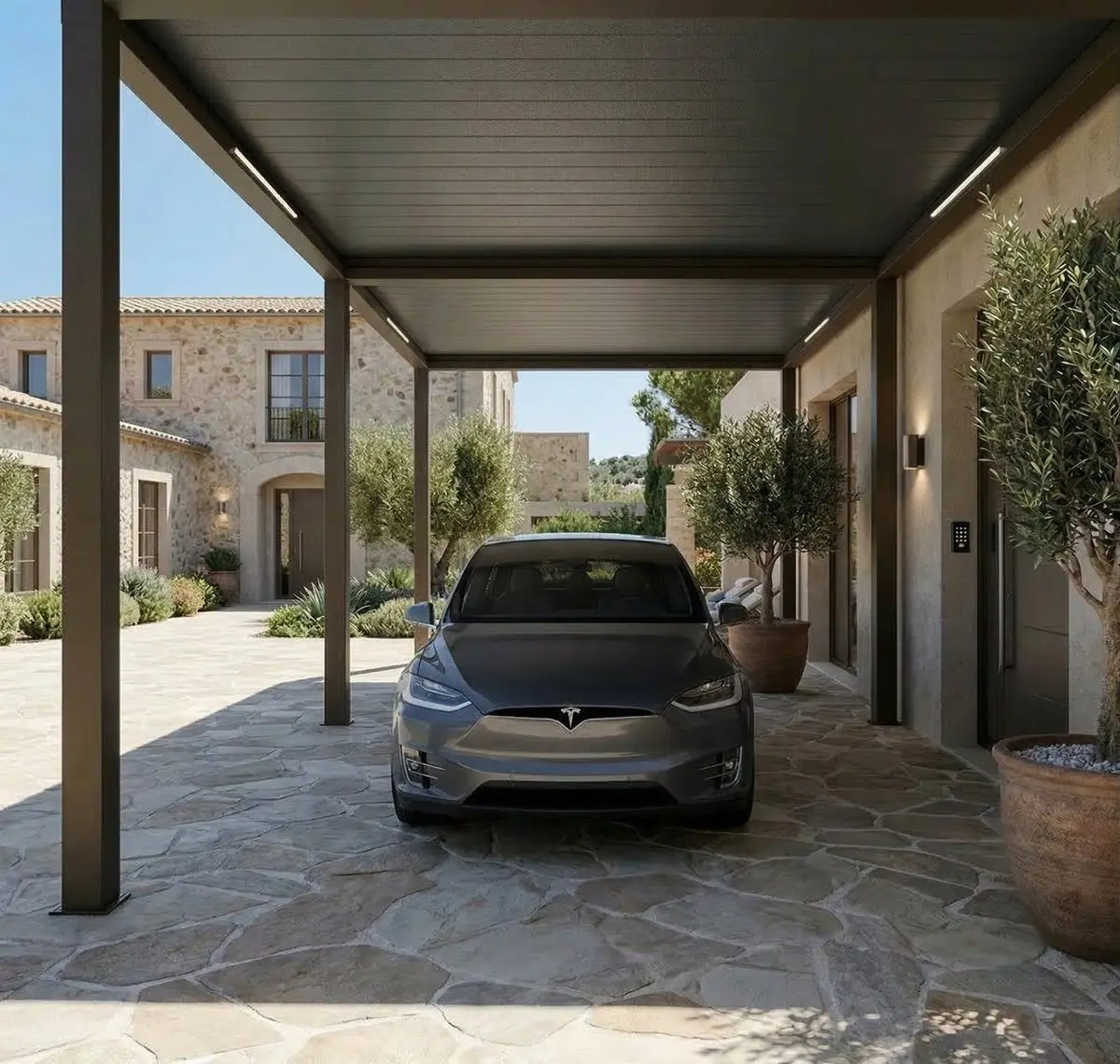
Design: Extruded aluminium profiles allow slim columns (150×150mm) and clean lines that wood and steel cannot match at the same structural capacity. LED lighting, guttering, and side elements integrate seamlessly.
Sustainability: Aluminium is 100% recyclable without loss of quality. The energy payback period for recycled aluminium is a fraction of virgin production.
Cost: Higher upfront than wood, comparable to steel. But the long service period with low routine care can make total cost of ownership lower.
Wood
Durability: Untreated wood degrades within 5–10 years outdoors. Pressure-treated timber lasts 15–20 years but requires regular staining/sealing every 2–3 years.
Maintenance: High. Sanding, staining, sealing, and checking for rot are annual tasks.
Design: Warm, natural aesthetic that suits traditional architecture. However, wood requires larger cross-sections for the same load capacity, resulting in bulkier columns and beams.
Sustainability: Wood is renewable, but pressure-treatment chemicals and frequent recoating offset some environmental benefits.
Cost: Lowest upfront, but highest maintenance cost over time.
Steel
Durability: Steel is extremely strong but susceptible to rust without proper galvanisation and coating. Hot-dip galvanised steel lasts 20–30 years in moderate climates.
Maintenance: Moderate. Rust spots need attention, and recoating is required every 5–10 years.
Design: Steel allows the longest spans and thinnest profiles for heavy-load applications. However, fabrication is less flexible than aluminium extrusion for complex shapes.
Sustainability: Steel is recyclable but energy-intensive to produce. Galvanisation adds environmental load.
Cost: Moderate upfront, moderate maintenance cost.
The Verdict
For residential carports where aesthetics, low maintenance, and longevity matter, aluminium is the best all-round choice. Wood suits those who prefer a traditional look and are willing to maintain it. Steel is best for industrial or heavy-duty applications where maximum span is the priority.
PONARC project note
For Aluminium Carport vs. Wood vs. Steel: Which Material Is Best?, the useful specification route is to connect the idea to the real opening, substrate, exposure and intended use. PONARC treats the page as a decision aid: which system family fits, what must be checked, and which assumptions should stay project-specific rather than generic.
Next step
Send the relevant dimensions, photos of the installation area, location context, preferred finish and use case. PONARC can then map the request to the correct product family, technical checks and quotation path without adding unsupported performance claims.
PONARC PROJECT NOTE
How to use this article in a real specification
Treat the article as a planning filter, then confirm dimensions, exposure, fixing surface, operation route and documentation needs with the PONARC team before final quotation.
- Shortlist the matching product family
- Check site assumptions before comparing prices
- Send a brief or drawings for project review
Related Products
Interested in PONARC products?