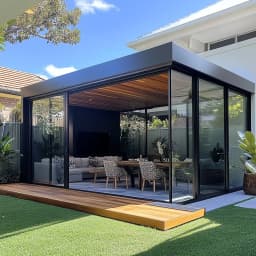
Suitable projects
Match the product to the use case first, then compare alternatives only when the project constraints are known.
- Clear use case
- Known dimensions
- Known exposure and installation context
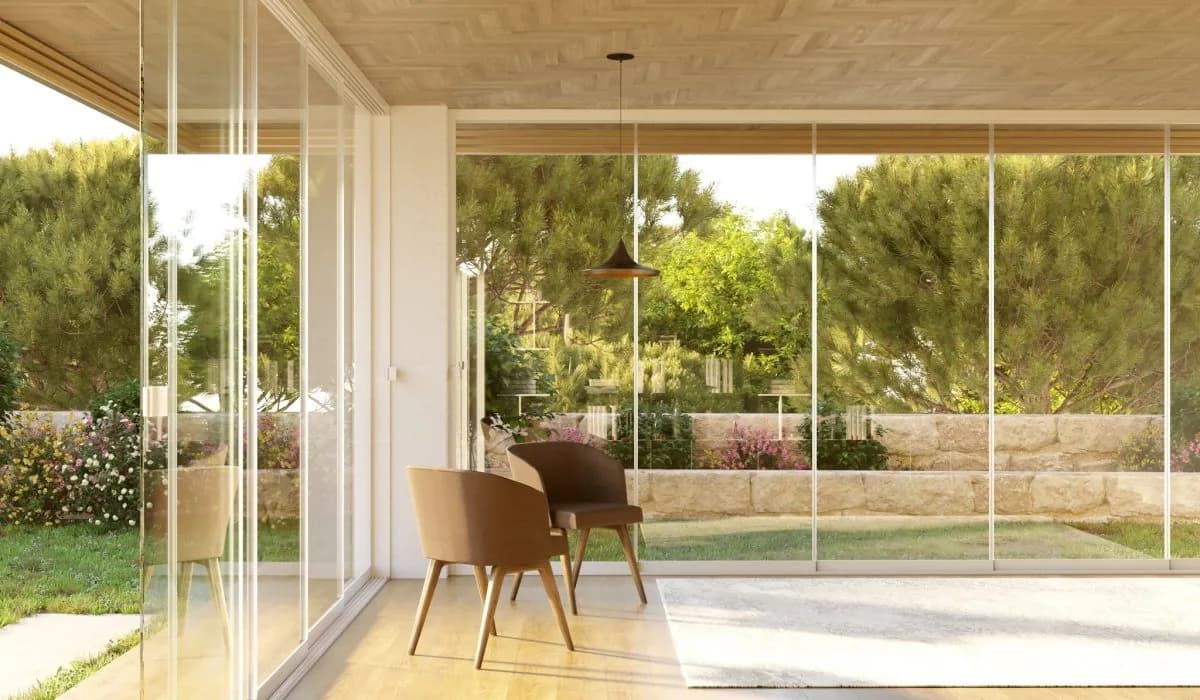
 VISIOMOD
Glass Door Systems & French Balcony
Formerly known as Guillotine Glass Systems
GGVertically sliding glass wall system — panels glide upward and disappear into the ceiling, giving maximum opening without side storage. Ideal for hotel lobbies, event venues and luxury residential projects. Any RAL colour.
Vertically Sliding Glass Wall
The Guillotine glass system features vertically sliding glass panels that rise into a concealed header box above the opening. Each panel is counterbalanced by stainless steel cable and spring mechanisms, allowing single-hand operation despite panel weights up to 80kg. The system is ideal for bar counters, restaurant service hatches, and terrace barriers where horizontal sliding space is unavailable. Panels are 8–10mm tempered glass running in slim aluminium side channels with EPDM weatherseals. Standard configurations include single-panel (up to 1200mm wide) and multi-panel (up to 3600mm wide with independent panels). The header box is 150mm deep and can be concealed within the ceiling structure. When fully open, the glass disappears completely into the header.
Use this product when its technical role, installation route and project assumptions are clear enough to move from browsing to quotation.
Match the product to the use case first, then compare alternatives only when the project constraints are known.
Confirm dimensions, fixing conditions, finish requirements, operation method and any local approval expectations.
Use PONARC as the system layer: connect product choice to brand, technical review and quote route.
Use these answers when comparing a vertical sliding glass wall route for cafes, restaurants, counters and openings with limited side stacking space.
A guillotine glass system uses motorised vertical glass panels for openings where the glass should move up and down instead of sliding or folding sideways.
Compare glass systems →Vertical sliding is useful when side stacking is limited, when a hospitality opening needs fast up-down control, or when the project wants a glass wall that can partly open without occupying floor width.
Compare horizontal route →Confirm opening size, header or ceiling zone, motor and control route, safety devices, service access, glass type, wind exposure and drainage expectation before pricing.
Review vertical glass route →TECHNOLOGY & DETAILSPanels rise fully into the concealed header box — no visible glass when open.
Spring-cable mechanism makes even heavy panels effortless to operate with one hand.
No horizontal space needed for stacking or folding — ideal for narrow openings.
Perfect for bar counters and restaurant pass-throughs with bottom sill at counter height.
TECHNICAL SPECIFICATIONSFREQUENTLY ASKED QUESTIONSThe counterbalance mechanism handles panels up to 80kg. Typical 8mm glass panels of 1000×1200mm weigh approximately 24kg.
150mm deep × panel height + 100mm high. It can be recessed into the ceiling or soffit.
Yes. Multi-panel configurations allow each panel to open and close independently.