 VISIOMOD
Privacy Screens, Fences & Gates
VisioMod Trama — Rhombus Pattern Aluminium Fence
Formerly known as Trama Rhombus Relief Fence
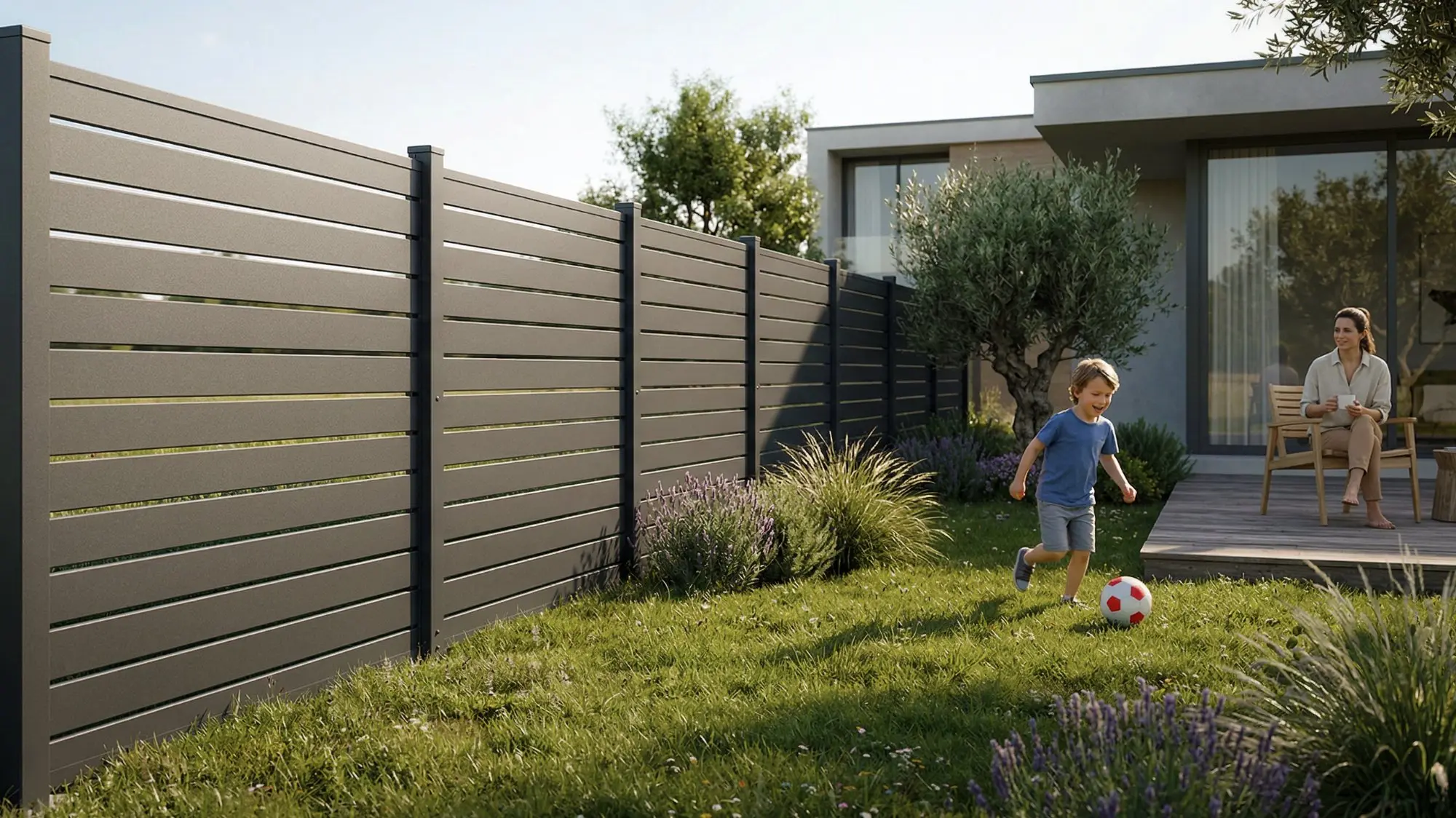
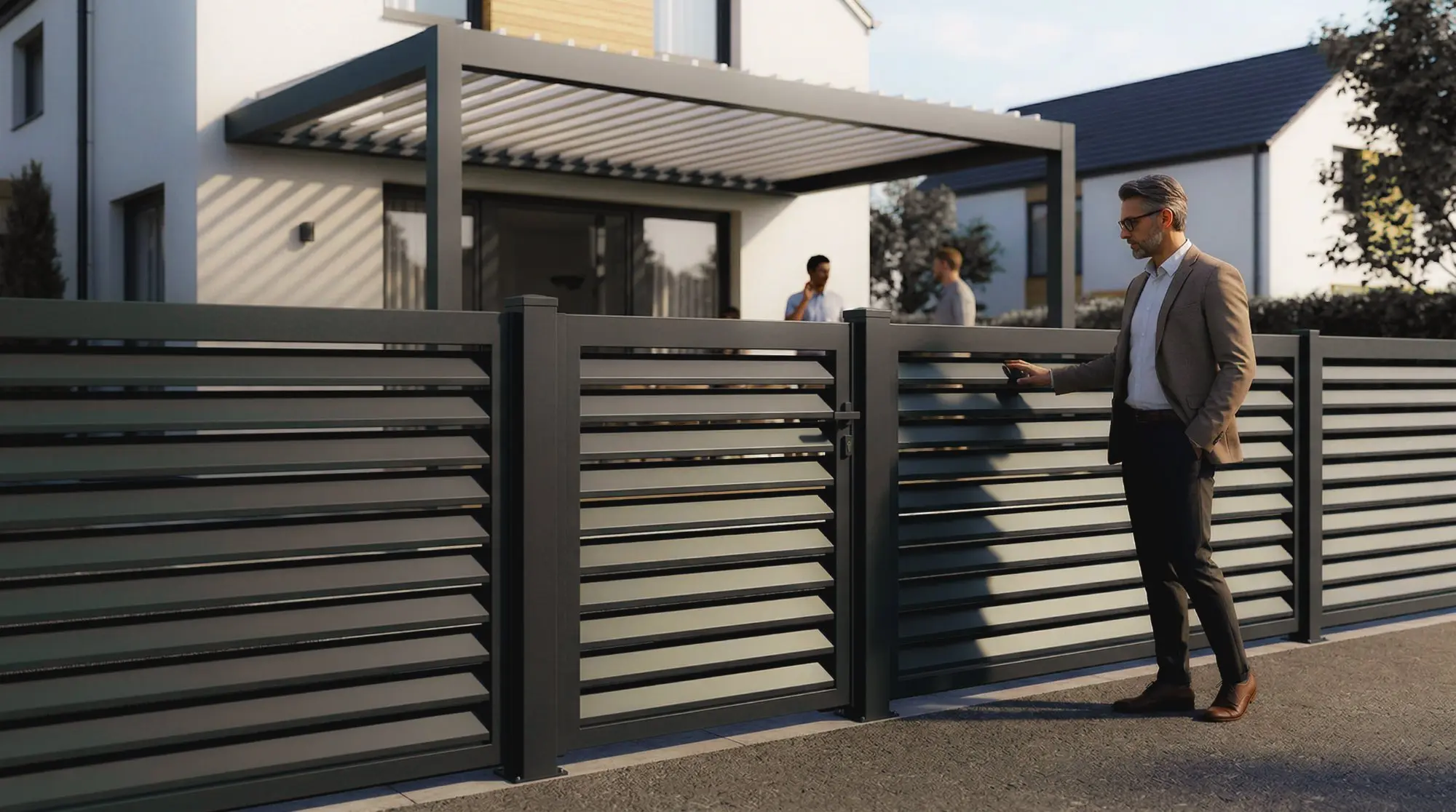
VF-TRARhombus-pattern aluminium fence with 35 mm relief depth — the boundary that reads as architecture. 200 × 100 mm rhombus elements stack in a staggered pattern that is solid privacy from the street and shifting shadow texture up close. The same pattern animates differently across the day as the sun moves across the facade. Heights 1800 / 2000 mm, Qualicoat Class 2 in any RAL or three woodgrain laminates (Walnut, Oak, Wenge). Designed for facade-integrated boundaries on contemporary villas and Corten-style architecture. A textural alternative to flat aluminium panels and perforated screens.
KEY FEATURES
- Rhombus geometry — real surface depth
- Day-long changing shadow play
- Full privacy from a distance
- Heights 1800 / 2000 mm
- Any RAL + woodgrain laminate
TECHNICAL SPECIFICATIONSBuilt to Standard.
Engineering overview
Reading on the facade
The 35 mm relief is the design tool. At 8 to 10 a.m. and again from 5 p.m. onwards, low sun angles throw long diagonal shadows across the rhombus field, turning the boundary into an animated surface that complements rather than competes with planting. Between 11 a.m. and 3 p.m. the relief flattens visually and the panel reads as a uniform textured plane, so the boundary recedes when the garden or terrace is most actively used. For anthracite RAL specifications (RAL 7016, 7021, 9005) the relief reads as graphic and architectural, well suited to minimalist concrete and render facades. For the three woodgrain laminates the relief reads as a textile or weave, well suited to stone, brick and softer landscape settings. Trama pairs particularly well with Cristallo full-height glass at the lower 900 mm of a boundary, with Trama above to 2000 mm, producing a layered boundary that is transparent at planting level and textural at sightline level.
Foundation & site notes
Foundations are sized for the higher dead load: Trama panels weigh approximately 30 to 35 percent more than flat equivalents at the same span due to the relief geometry and forming. C25/30 concrete pad foundations 600 by 600 by 800 mm minimum at every post, with deeper pads on exposed sites at the 1.4 kN/m² wind class. Adjacent-panel alignment is critical: the staggered rhombus pattern must continue across post lines without break, so panels are supplied paired and indexed at the factory and installers must respect the indexing during set-out. Concealed post fixings preserve the continuous shadow reading; surface-fixed brackets are not specified at Signature tier. Gate post integration with Porta uses a heavier post section to carry both the gate hardware and the adjacent Trama panel without alignment drift over time.
VISIOMOD SYSTEMVisioMod System — one platform, seven design lines
VisioMod System