Suitable projects
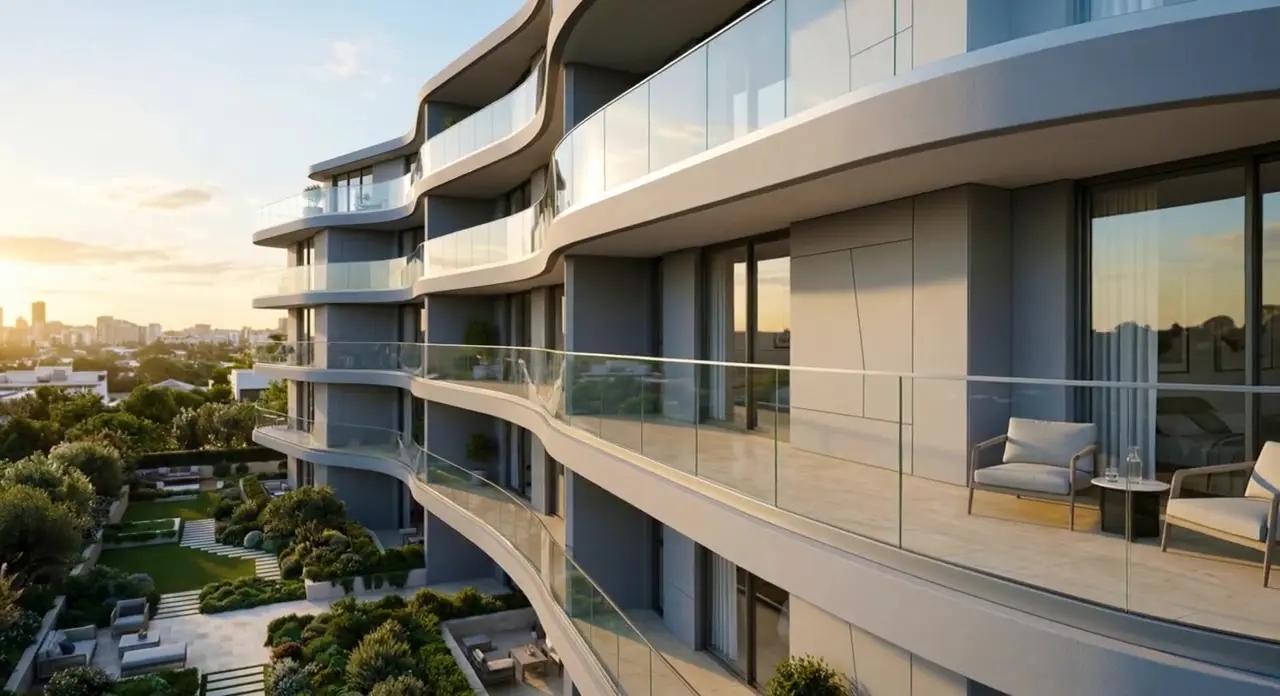
Glass railings suit balconies, terraces and commercial edges where transparency and safety need to work together.
- Balconies and terraces
- View-sensitive residential projects
- Commercial decks with stronger load assumptions
 VISIOMOD
Frameless Glass Railings
Formerly known as FS 3000 Frameless Glass System
FS 3000Commercial-grade frameless glass balustrade with reinforced aluminium base channel. Reviewed by project line-load category for offices, hotels and mid-rise buildings. EN 1991 documentation route.
Commercial-Grade Frameless Barrier
The FS 3000 is engineered for commercial and public-access applications where higher barrier loads are mandatory. The 140mm aluminium base shoe channel accommodates heavier VSG laminated glass (8+8, 10+10 or 12+12 mm VSG) for a laminated VSG panel. Designed and tested to withstand 3.0 kPa wind load per EN 1991-1-1, it meets the requirements for office buildings, retail spaces, hotels, and public terraces. The profile uses a dry-glaze wedge retention system with adjustable EPDM gaskets, allowing panel alignment during installation without wet sealants. Anchor spacing is 250mm centres using M12 A4 stainless steel bolts into concrete or welded base plates for steel structures. Cap rails in round (Ø42mm) or flat (60×20mm) profiles can be added for code-compliant graspable handrails. Full-length LED channel integration is available for architectural lighting effects.
Use this route when the project needs view-preserving safety, a clean architectural edge and clear load or approval assumptions.
Glass railings suit balconies, terraces and commercial edges where transparency and safety need to work together.
Confirm substrate, glass height, wind exposure, line-load requirement and approval documentation before pricing.
Move from visual selection to standards-aware specification so the railing is not treated as a simple glass panel.
Use FS 1500 for lighter residential frameless glass routes.
Heavy-duty routeUse FS 7000 when public or high-load assumptions matter.
Project reviewShare site dimensions, exposure and target use before final product selection.
Product familiesCompare the wider PONARC outdoor-living and architectural system range.
Market routesOpen buyer-intent pages that connect this product family to country and project searches.
Use these answers when comparing a commercial-grade frameless glass railing route between residential FS 1500 and heavy-duty FS 7000.
FS 3000 is used for glass railing projects that need a stronger commercial or exposed-edge route than a light residential base channel, while still keeping the frameless glass look.
Compare FS systems →FS 3000 is the middle route when the project needs more robustness than FS 1500 but does not clearly require the heavy public-edge positioning of FS 7000.
Compare FS 1500 →Confirm use case, fixing method, substrate, glass height, wind exposure, line-load assumptions and the local documentation expected before final product selection.
Start technical review →TECHNOLOGY & DETAILSWider channel with reinforced walls for commercial wind and crowd loads — EN 1991-1-1 compliant to 3.0 kPa.
8+8, 10+10 or 12+12 mm VSG — the industry standard for public-access barriers and high-rise balconies.
Dry-glaze aluminium wedges with EPDM gaskets allow ±2° panel adjustment for perfect vertical alignment on uneven substrates.
Optional continuous LED channel in the base shoe or cap rail for ambient architectural lighting.
Round Ø42mm or flat 60×20mm cap rails in matching finish for graspable handrail compliance.
STRUCTURAL PERFORMANCEOne person leaning against the railing — 0.8 kN/m
TECHNICAL SPECIFICATIONS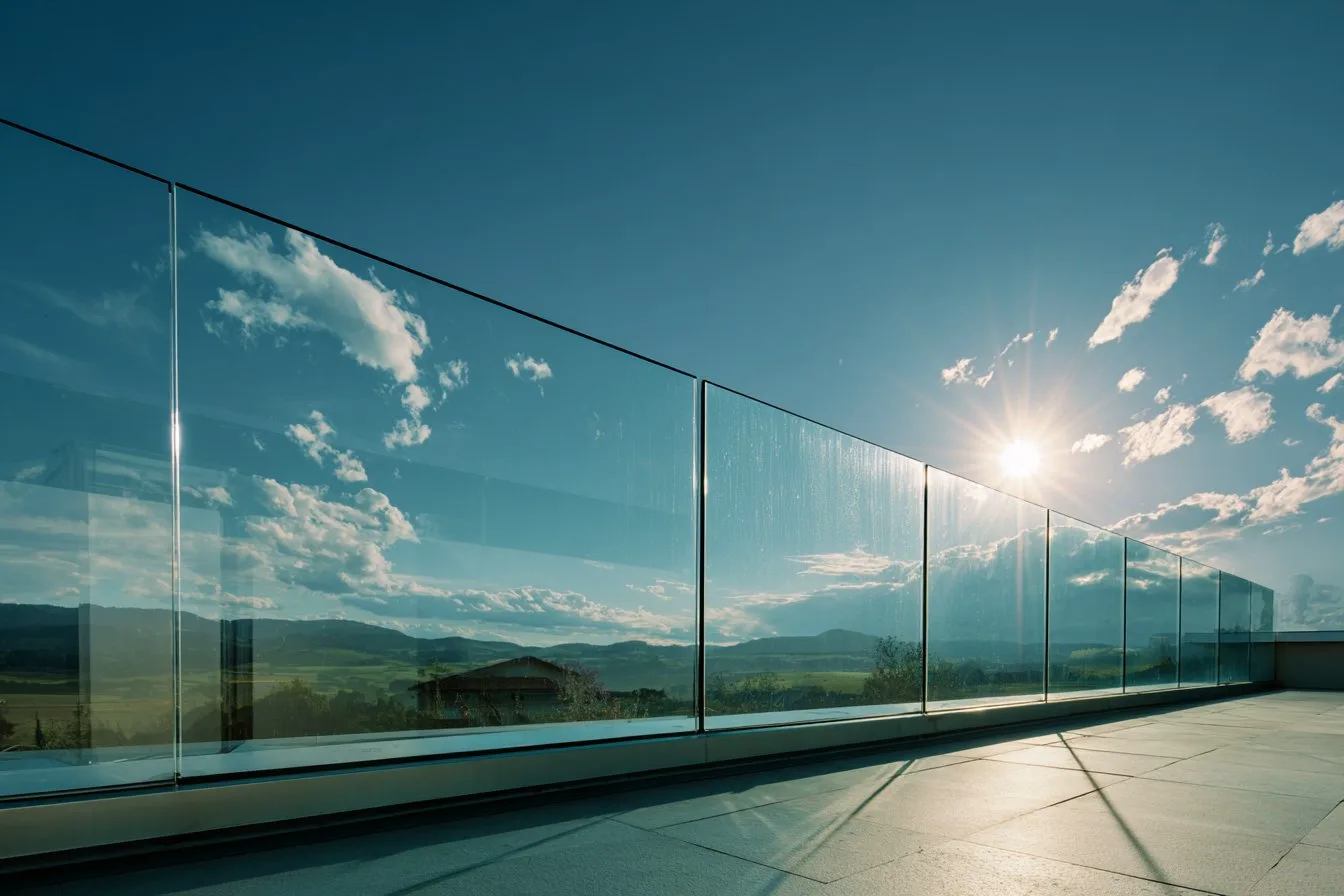 APPLICATIONS
The FS 3000 is the workhorse of the FS frameless glass railing series — the system architects specify most frequently for commercial and mid-rise residential projects.…
FREQUENTLY ASKED QUESTIONSThe system is tested for 3.0 kPa wind load per EN 1991-1-1, suitable for commercial, public, and high-rise applications.
Yes. With 8+8, 10+10 or 12+12 mm VSG glass and 250mm anchor spacing, it meets the structural requirements for high-rise residential and commercial buildings.
Yes. Curved laminated glass with a minimum radius of 1.0m can be accommodated. Contact engineering for panel-specific calculations.
CE marked. Glass per EN 12150 and EN ISO 12543. System tested per EN 1991-1-1. Base shoe in 6063-T5 aluminium per EN 755.


