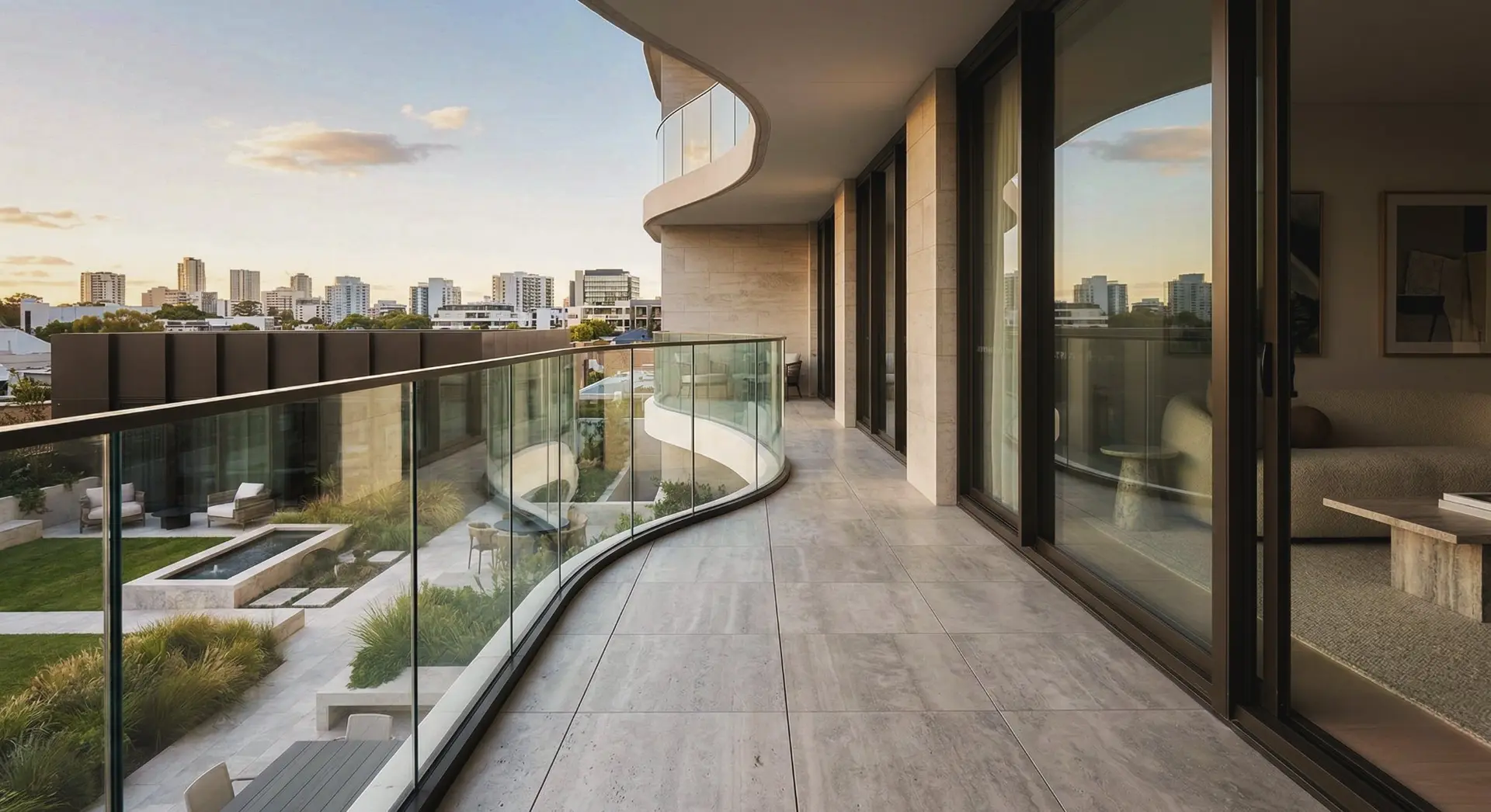
Glass Balcony Railings in Germany: Systems, Standards and Specification.
Glass balcony railing specification for Germany: frameless and post-mounted routes, standards context, wind-load checks and system preselection.
Glass balcony railings combine safety with unobstructed views. This guide covers the German market specifically.
Frameless vs Post-Mounted
Frameless systems (FS 1500, FS 3000, FS 7000) clamp the glass into an aluminium base channel with no visible posts. Maximum transparency. The glass IS the barrier.
Post-mounted systems (VisioAir) use aluminium or stainless steel posts with glass infill panels. Lower cost, easier installation, suitable for retrofit.
German Standards
DIN 18065 defines minimum railing heights: 900mm residential, 1100mm public. EN 12150-1 mandates tempered safety glass. EN 1991-1-1 specifies horizontal loads: 0.5 kN/m residential, 1.0 kN/m commercial.
Glass Selection
Laminated safety glass (VSG) is mandatory. Thickness depends on wind exposure: 6+6mm for sheltered residential, 10+10mm for commercial, up to 15+15mm for high-rise applications.
Wind Load Calculation
EN 1991-1-4 governs wind actions. Building height, terrain category and exposure determine the design pressure. FS 7000 is reviewed by project for high-rise balcony wind exposure and glass build-up.
Conclusion
Choose your system based on building height, wind zone and aesthetic requirements. PONARC offers certified solutions for every application.
PONARC project note
For Glass Balcony Railings in Germany: Systems, Standards and Specification, the useful specification route is to connect the idea to the real opening, substrate, exposure and intended use. PONARC treats the page as a decision aid: which system family fits, what must be checked, and which assumptions should stay project-specific rather than generic.
Next step
Send the relevant dimensions, photos of the installation area, location context, preferred finish and use case. PONARC can then map the request to the correct product family, technical checks and quotation path without adding unsupported performance claims.
PONARC PROJECT NOTE
How to use this article in a real specification
Treat the article as a planning filter, then confirm dimensions, exposure, fixing surface, operation route and documentation needs with the PONARC team before final quotation.
- Shortlist the matching product family
- Check site assumptions before comparing prices
- Send a brief or drawings for project review
Interested in PONARC products?